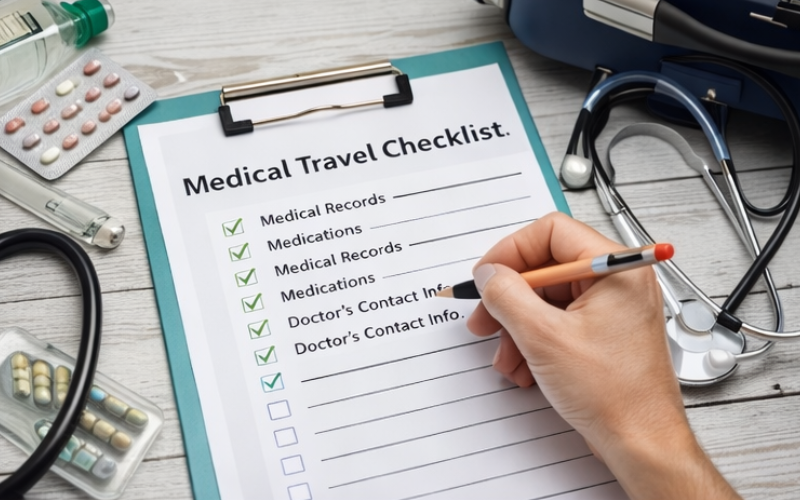
Long-distance medical travel is not like booking a regular trip. When health is the main reason for travel, every small detail matters. Missed medications, incomplete documents, poor transport planning, or lack of post-arrival support can quickly turn a necessary medical journey into a stressful and risky experience.
This guide is designed for patients, families, and caregivers who want a clear, step-by-step medical travel checklist that works in real life—not theory. Whether the patient is traveling across the country or internationally for treatment, this article helps you prepare thoroughly, reduce risks, and stay in control from departure to recovery.
📦 Quick Summary Box
This article provides:
- A complete medical travel checklist for long-distance patients
- Practical preparation steps before, during, and after travel
- Common mistakes to avoid
- Transport and accommodation planning tips
- Real-world examples and safety insights
Why a Medical Travel Checklist Is Essential
Medical travel involves many moving parts: health conditions, transport timing, medications, legal paperwork, and recovery planning. Unlike leisure travel, there is little room for error.
A structured checklist helps you:
- Stay organized under pressure
- Avoid last-minute panic
- Reduce medical risks
- Communicate better with healthcare providers
- Protect elderly or fragile patients
For long-distance patients, preparation is not optional—it’s essential.
Step 1: Medical Readiness Checklist
Before any tickets are booked, confirm that the patient is medically fit to travel.
✔ Medical clearance requirements
- Written travel approval from the treating doctor
- Summary of diagnosis and treatment plan
- Clearance for flying or long road journeys
- List of activity or movement restrictions
✔ Health risk assessment
- Blood pressure stability
- Heart and lung function
- Risk of blood clots
- Pain management plan
Real-world example:
A patient traveling 800 km for spinal surgery was advised to stop every 90 minutes during road travel to reduce clot risk. This instruction became a critical part of the travel plan.
Step 2: Medical Records and Documentation Checklist
Missing paperwork can delay treatment or cause serious complications.
Essential documents to carry:
- Medical reports and test results
- Doctor referral letters
- Prescriptions (with generic names)
- Discharge summaries (if post-surgery travel)
- Insurance approvals and claim documents
Best practices:
- Carry printed copies in a folder
- Store digital copies on phone and cloud
- Share copies with the caregiver
Tip: Label documents clearly for quick access in emergencies.
Step 3: Medication Preparation Checklist
Medication mistakes are one of the most common medical travel issues.
Medication planning essentials:
- Carry extra supply for 7–10 days
- Keep medicines in original packaging
- Use a pill organizer for daily doses
- Carry prescriptions for customs or security checks
Special considerations:
- Insulin or injectable medications
- Refrigerated medicines
- Time-zone dosage adjustments
Important: Never pack essential medicines in checked luggage.
Step 4: Choosing the Right Medical Transport
Transport planning depends on distance, condition, and recovery stage.
Transport options include:
- Commercial flights with medical assistance
- Non-emergency medical transport vans
- Ground ambulances
- Air ambulances for critical cases
🚑 Medical Transport Comparison Table
| Transport Type | Suitable For | Advantages | Limitations |
|---|---|---|---|
| Commercial Flight | Stable patients | Affordable, fast | Limited medical support |
| Medical Transport Van | Mobility-limited patients | Comfortable, trained staff | Not for emergencies |
| Ground Ambulance | Medium distances | Continuous monitoring | Slower for long routes |
| Air Ambulance | Critical patients | ICU-level care | High cost |
Step 5: Travel Day Safety Checklist
The day of travel is often the most exhausting.
Before departure:
- Confirm transport timing
- Eat light, doctor-approved meals
- Wear loose, comfortable clothing
- Carry water and snacks
During travel:
- Monitor vitals if advised
- Encourage movement when safe
- Avoid dehydration
- Follow medication schedule strictly
Practical tip: Morning departures are usually easier on patients than late-night travel.
Step 6: Accommodation and Stay Planning Checklist
Where the patient stays can directly affect recovery.
Look for accommodation that offers:
- Elevator or ground-floor access
- Wheelchair-friendly bathrooms
- Quiet environment
- Close proximity to hospital
- Flexible check-in and check-out
Recommended options:
- Medical hotels
- Serviced apartments
- Hospital guest housing
Step 7: Caregiver and Support Checklist
Long-distance patients should not manage alone.
A caregiver should handle:
- Medication reminders
- Mobility assistance
- Communication with doctors
- Emergency decision-making
Backup support options:
- Professional medical escorts
- Nursing attendants
- Local care agencies
Pro tip: Always designate a primary and secondary caregiver.
Step 8: Emergency Preparedness Checklist
Even well-planned journeys can face sudden complications.
Emergency readiness includes:
- Local emergency numbers saved
- Nearest hospital list
- Emergency insurance coverage
- Backup funds or payment methods
Emergency kit should include:
- Basic first aid supplies
- Extra medications
- Doctor contact details
Step 9: Post-Arrival and Recovery Checklist
Arrival does not mean the journey is over.
After arrival:
- Schedule rest before appointments
- Reconfirm medical schedule
- Monitor symptoms closely
- Adjust medications if advised
For return travel:
- Obtain discharge clearance
- Update medical documents
- Reassess transport needs
Common Medical Travel Mistakes to Avoid
❌ Traveling without medical clearance
❌ Underestimating recovery time
❌ Booking accommodation far from hospital
❌ Carrying limited medication
❌ Skipping travel insurance
Avoiding these mistakes significantly improves safety and outcomes.
Pros and Cons of Long-Distance Medical Travel
✅ Pros:
- Access to advanced care
- Specialized expertise
- Better treatment options
❌ Cons:
- Travel fatigue
- Higher costs
- Increased planning complexity
A checklist minimizes the downsides.
Quick Long-Distance Medical Travel Checklist
✔ Medical clearance obtained
✔ Records organized
✔ Medications packed with extras
✔ Transport confirmed
✔ Accommodation secured
✔ Caregiver arranged
✔ Emergency plan ready
Frequently Asked Questions (FAQs)
1. How early should I start planning medical travel?
Ideally 3–4 weeks in advance for long-distance journeys.
2. Is travel insurance necessary?
Yes, especially for unexpected medical emergencies or delays.
3. Can patients travel alone?
Not recommended for elderly, post-surgery, or fragile patients.
4. What if symptoms worsen during travel?
Seek immediate medical help and inform the treating doctor.
5. Should follow-up appointments be planned before travel?
Yes, scheduling ahead reduces stress and delays.
6. Are medical escorts worth it?
For high-risk patients, professional escorts add safety and peace of mind.
7. How do I manage anxiety during medical travel?
Clear planning, familiar routines, and caregiver support help greatly.
Conclusion
Medical travel over long distances requires more than good intentions—it requires clear planning, structured preparation, and constant awareness. A reliable checklist transforms uncertainty into confidence and ensures the patient’s health remains the top priority at every stage.
When each step is planned carefully, medical travel becomes safer, calmer, and more manageable—for patients and families alike.