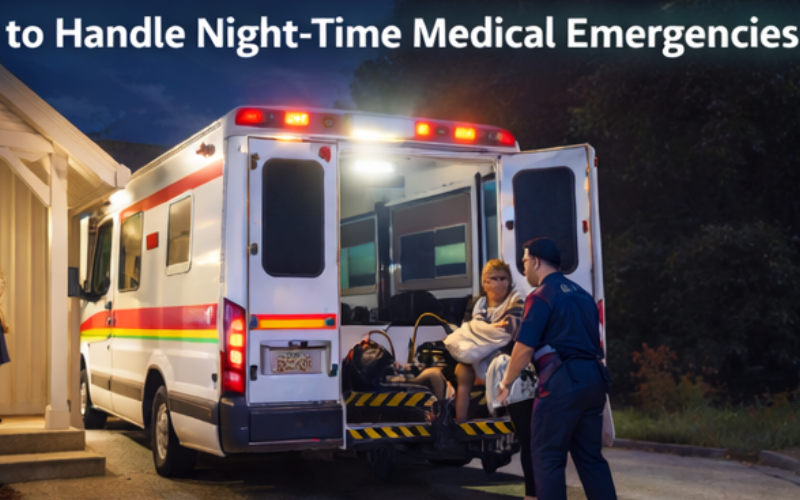
Medical emergencies don’t follow office hours. In fact, many serious health incidents happen late at night—when clinics are closed, visibility is low, and panic feels stronger. A sudden fever spike, chest pain, injury, or breathing problem at night can feel far more overwhelming than during the day.
Knowing how to handle night-time medical emergencies helps you stay calm, act wisely, and protect lives when resources feel limited. This guide is written for everyday people, using clear language and real-world scenarios, so you know exactly what to do when an emergency strikes after dark.
🔍 Quick Summary Box
Handling night-time medical emergencies involves:
- Staying calm and alert despite fatigue
- Assessing the situation carefully
- Calling emergency services without delay
- Providing basic first aid safely
- Using available resources wisely
- Preparing in advance for night emergencies
The right actions at night can be just as life-saving as during the day.
Why Night-Time Medical Emergencies Feel More Difficult
Night emergencies come with unique challenges:
- Reduced visibility
- Closed clinics and pharmacies
- Fewer people around to help
- Fatigue and slower reaction times
- Transportation difficulties
These factors make preparedness and clear thinking especially important after dark.
Quick Night-Time Emergency Checklist
If a medical emergency happens at night, remember this checklist:
- ✔️ Turn on lights immediately
- ✔️ Stay calm and focused
- ✔️ Call emergency services
- ✔️ Check breathing and responsiveness
- ✔️ Provide basic first aid if safe
- ✔️ Keep the person warm and comfortable
- ✔️ Monitor closely until help arrives
This checklist helps guide your actions when stress is high.
Step 1: Stay Calm and Wake Up Fully
When emergencies happen at night, confusion is common.
Why This Step Matters
Sleep inertia can slow thinking and reaction time. Take a few seconds to:
- Take a deep breath
- Turn on lights
- Fully wake yourself
A calm and alert responder makes better decisions.
Step 2: Assess the Situation Carefully
Before acting, understand what’s happening.
Key Questions to Ask
- Is the person conscious?
- Are they breathing normally?
- Is there visible bleeding?
- Are they in severe pain?
Night-time silence can hide symptoms, so observe carefully.
Step 3: Call Emergency Services Without Delay
Do not wait until morning if symptoms are serious.
Night-Time Symptoms That Require Immediate Help
- Chest pain
- Difficulty breathing
- Severe bleeding
- Unconsciousness
- Seizures
- Signs of stroke
Emergency services operate 24/7 for a reason—use them.
Step 4: Ensure Safety and Visibility
Poor lighting increases risk.
Improve Visibility Quickly
- Turn on all nearby lights
- Use phone flashlight if needed
- Clear obstacles from walking paths
Good visibility prevents accidents while assisting the patient.
Step 5: Provide Basic First Aid at Night
Basic first aid principles remain the same, but extra caution is needed.
For Breathing Problems
- Sit the person upright
- Loosen tight clothing
- Keep the environment calm
For Bleeding
- Apply firm pressure
- Use clean cloths or bandages
- Maintain steady pressure
For Fever or Illness
- Check temperature if possible
- Keep the person hydrated if conscious
- Avoid overdosing on medication
Step 6: Keep the Person Warm and Comfortable
Night temperatures are often lower, increasing the risk of shock.
How to Prevent Shock at Night
- Use blankets or jackets
- Lay the person down if safe
- Elevate legs slightly if appropriate
- Reassure them calmly
Warmth and reassurance can stabilize vital signs.
Step 7: Managing Panic and Fear After Dark
Night-time emergencies amplify fear—for both the patient and the helper.
Calming Techniques That Help
- Speak slowly and clearly
- Use the person’s name
- Explain what you’re doing
- Remind them help is coming
Calm communication reduces stress and complications.
Step 8: Special Night-Time Emergency Situations
Night-Time Injuries at Home
Common causes include falls, burns, or cuts.
- Turn on lights before moving
- Do not rush the injured person
- Check for head or spinal injuries
Medical Emergencies While Traveling at Night
- Pull over safely
- Use hazard lights
- Stay visible to traffic
- Call emergency services immediately
Children and Night-Time Emergencies
- Keep them warm and reassured
- Avoid over-handling
- Watch breathing closely
Step 9: Transportation Challenges at Night
Transportation is often harder after dark.
Transport Options Comparison Table
| Option | When to Use | Risks |
|---|---|---|
| Ambulance | Serious or unclear conditions | None (best option) |
| Private car | Minor issues, no spinal risk | Limited monitoring |
| Ride services | Rare emergencies only | Delays |
| Walking | Never recommended | Unsafe |
If in doubt, wait for an ambulance.
Step 10: What NOT to Do During Night-Time Medical Emergencies
Mistakes are more likely at night.
Avoid These Common Errors
- ❌ Ignoring symptoms until morning
- ❌ Giving incorrect medication doses
- ❌ Moving injured people unnecessarily
- ❌ Letting exhaustion affect decisions
- ❌ Driving recklessly due to urgency
Slow, careful actions are safer than rushed ones.
Pros and Cons of Handling Emergencies at Night
✅ Pros
- Quieter environment
- Less traffic in some areas
- Faster ambulance movement in cities
❌ Cons
- Reduced visibility
- Fewer nearby helpers
- Closed medical facilities
Preparation reduces these disadvantages significantly.
Real-Life Example: Night-Time Emergency at Home
A family member wakes with severe chest discomfort at 2 a.m.
Instead of waiting, the caregiver turns on lights, calls emergency services, helps the person sit comfortably, and keeps them calm.
Paramedics arrive quickly, and early action prevents serious complications.
How to Prepare for Night-Time Medical Emergencies
Preparation is your strongest defense.
Smart Night-Time Preparation Tips
- Keep emergency numbers visible
- Place flashlights near beds
- Stock a basic first aid kit
- Know nearby 24-hour hospitals
- Keep phones charged overnight
Small preparations make big differences.
Quick Night-Time Emergency Readiness Checklist
- ✔️ Charged phone
- ✔️ Working flashlight
- ✔️ First aid kit
- ✔️ Emergency contacts saved
- ✔️ Clear walkways at night
Frequently Asked Questions (FAQs)
1. Should I wait until morning for medical help?
No. Serious symptoms should always be treated immediately, regardless of time.
2. Are night-time emergencies more dangerous?
They can be if delayed. Prompt action reduces risk significantly.
3. How do I stay calm when woken suddenly?
Pause, breathe deeply, turn on lights, and focus on one step at a time.
4. Can fatigue affect emergency decisions?
Yes. That’s why simple checklists and calling professionals are crucial.
5. Is it safe to drive at night during emergencies?
Only if absolutely necessary and done carefully.
6. What if emergency services are delayed at night?
Stay on the call, follow instructions, and continue monitoring the patient.
7. How can families prepare for night emergencies?
Education, preparation, and having supplies ready make all the difference.
Final Thoughts: Preparedness Brings Confidence After Dark
Night-time medical emergencies are frightening—but they don’t have to be chaotic.
Knowing how to handle night-time medical emergencies allows you to act with confidence, clarity, and care when it matters most. With calm thinking, basic first aid knowledge, and smart preparation, you can protect your loved ones even in the quietest, darkest hours.
Emergencies don’t sleep—but with the right knowledge, neither does your readiness.