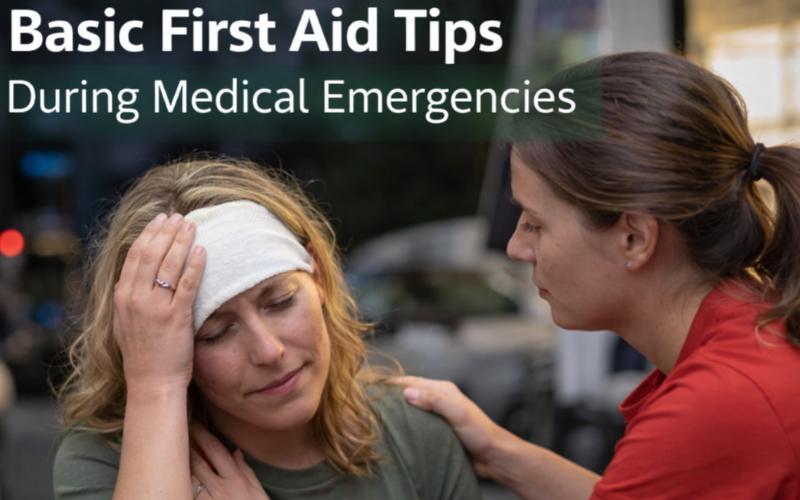
Medical emergencies don’t wait for perfect timing. They can happen at home, at work, on the road, or even while shopping. In those critical moments, professional medical help may be minutes away—but what you do before help arrives can make a real difference.
Knowing basic first aid tips during medical emergencies empowers you to act calmly, confidently, and correctly. You don’t need to be a doctor or paramedic. Simple, well-informed actions can reduce pain, prevent complications, and sometimes save a life.
This in-depth guide is written for everyday people, using clear language and real-life examples. It’s designed to be practical, trustworthy, and easy to follow—exactly what you need when seconds matter.
🔍 Quick Summary Box
Basic first aid during medical emergencies focuses on:
- Keeping the person safe
- Checking breathing and responsiveness
- Controlling bleeding
- Preventing shock
- Avoiding actions that cause harm
Knowing these basics helps you respond with confidence instead of panic.
Why Basic First Aid Knowledge Is So Important
Medical emergencies can escalate quickly. A minor injury can become serious if handled incorrectly. On the other hand, a serious emergency can be stabilized with proper first aid until medical professionals arrive.
Basic first aid helps to:
- Reduce the severity of injuries
- Prevent infections
- Stabilize vital functions
- Buy crucial time before advanced care
In many cases, first aid is the first line of defense.
Quick First Aid Checklist for Any Emergency
When faced with a medical emergency, remember this simple checklist:
- ✔️ Stay calm
- ✔️ Ensure the scene is safe
- ✔️ Call emergency services
- ✔️ Check responsiveness and breathing
- ✔️ Control bleeding
- ✔️ Keep the person comfortable
- ✔️ Monitor continuously
This checklist applies to almost all emergency situations.
Step 1: Stay Calm and Ensure Safety
Why Calmness Matters
Your behavior sets the tone. Panic leads to rushed decisions and mistakes. A calm approach helps you think clearly and act effectively.
Check the Scene First
Before helping, look for dangers:
- Traffic or moving vehicles
- Fire or smoke
- Electrical hazards
- Sharp objects
Never put yourself at risk. First aid starts with personal safety.
Step 2: Call for Medical Help Immediately
Even if you know first aid, professional help is essential in medical emergencies.
What Information to Share
When calling emergency services, provide:
- Exact location
- Nature of the emergency
- Age and condition of the person
- Whether the person is conscious and breathing
Stay on the line and follow instructions carefully.
Step 3: Check Responsiveness and Breathing
How to Check Responsiveness
- Gently tap the person
- Speak loudly and clearly
No response usually means the situation is serious.
How to Check Breathing
- Look for chest movement
- Listen for breath sounds
- Feel for air on your cheek
If breathing is abnormal or absent, inform emergency services immediately.
Basic First Aid Tips for Common Medical Emergencies
1. Severe Bleeding
Bleeding is one of the most urgent emergencies.
What to do:
- Apply firm pressure with a clean cloth or bandage
- Elevate the injured area if possible
- Keep pressure steady
Do not remove objects stuck in the wound.
2. Burns
Burns can happen from heat, electricity, chemicals, or steam.
First aid steps:
- Cool the burn with running water for 10–20 minutes
- Remove tight items like rings
- Cover loosely with a clean cloth
Avoid: ice, butter, toothpaste, or home remedies.
3. Choking
If a person cannot speak, cough, or breathe:
- Encourage coughing if mild
- Perform abdominal thrusts if trained
- Follow emergency instructions
For children and infants, techniques differ—extra care is required.
4. Heart Attack
Common signs include chest pain, shortness of breath, sweating, and nausea.
What to do:
- Call emergency services immediately
- Help the person sit comfortably
- Loosen tight clothing
- Keep them calm
Do not let them walk or exert themselves.
5. Stroke
Remember FAST:
- Face drooping
- Arm weakness
- Speech difficulty
- Time to call emergency services
Early action greatly improves outcomes.
6. Unconsciousness
If the person is unconscious but breathing:
- Place them in the recovery position
- Keep airway clear
- Monitor breathing
If they stop breathing, report immediately.
7. Fractures and Sprains
What to do:
- Keep the injured area still
- Apply cold compress to reduce swelling
- Do not try to realign bones
Improper movement can worsen injuries.
Preventing Shock: A Critical First Aid Step
Shock can occur after injury, bleeding, or trauma.
Signs of Shock
- Pale or clammy skin
- Rapid breathing
- Weak pulse
- Confusion
How to Help
- Lay the person down
- Elevate legs slightly (if no injury prevents it)
- Keep them warm
- Reassure them
What NOT to Do During Medical Emergencies
Avoiding harmful actions is essential.
Common Mistakes to Avoid
- ❌ Giving food or drink
- ❌ Leaving the person alone
- ❌ Using unverified home remedies
- ❌ Moving someone with head or spinal injuries
- ❌ Delaying professional help
Good intentions must be paired with correct actions.
Comparison Table: Correct vs Incorrect First Aid Actions
| Correct First Aid Actions | Incorrect Actions |
|---|---|
| Applying pressure to wounds | Ignoring bleeding |
| Cooling burns with water | Using ice or ointments |
| Calling emergency services | Waiting too long |
| Keeping patient warm | Overheating |
| Monitoring breathing | Assuming they are fine |
Pros and Cons of Performing First Aid
✅ Pros
- Saves lives
- Reduces injury severity
- Provides comfort and reassurance
- Prevents complications
❌ Cons
- Risk if performed incorrectly
- Requires basic knowledge
Learning basic first aid greatly reduces the risks.
Real-Life Example: First Aid in Action
Imagine a family member collapses at home.
You notice shallow breathing and confusion.
You call emergency services, help them lie down, loosen tight clothing, and keep them calm. You monitor their breathing until help arrives.
Those simple steps could prevent serious complications.
How to Prepare Yourself for Medical Emergencies
Preparation builds confidence.
Smart Preparation Tips
- Take a basic first aid course
- Keep a stocked first aid kit
- Save emergency numbers on your phone
- Learn emergency signs and symptoms
Prepared people act faster and smarter.
Frequently Asked Questions (FAQs)
1. What are the most important basic first aid tips during medical emergencies?
Staying calm, calling for help, and checking breathing are the most critical steps.
2. Can first aid replace medical treatment?
No. First aid supports the person until professional medical care arrives.
3. Should I help even if I’m not trained?
Yes. Simple actions like calling for help and staying calm are always useful.
4. Is it safe to move an injured person?
Only if they are in immediate danger. Otherwise, keep them still.
5. What should be in a basic first aid kit?
Bandages, antiseptic wipes, gloves, gauze, scissors, and a cold pack.
6. How can I stay calm during emergencies?
Take deep breaths, focus on one step at a time, and follow instructions.
7. Is first aid useful for minor injuries too?
Absolutely. Proper first aid prevents infection and speeds recovery.
Final Thoughts: First Aid Is a Life Skill, Not a Medical Degree
Medical emergencies are unpredictable—but your response doesn’t have to be.
Knowing basic first aid tips during medical emergencies gives you the confidence to act when others freeze. These skills are not about perfection. They are about presence, awareness, and care.
Learning first aid is one of the most practical, human, and valuable skills you can ever have—for your family, your community, and yourself.