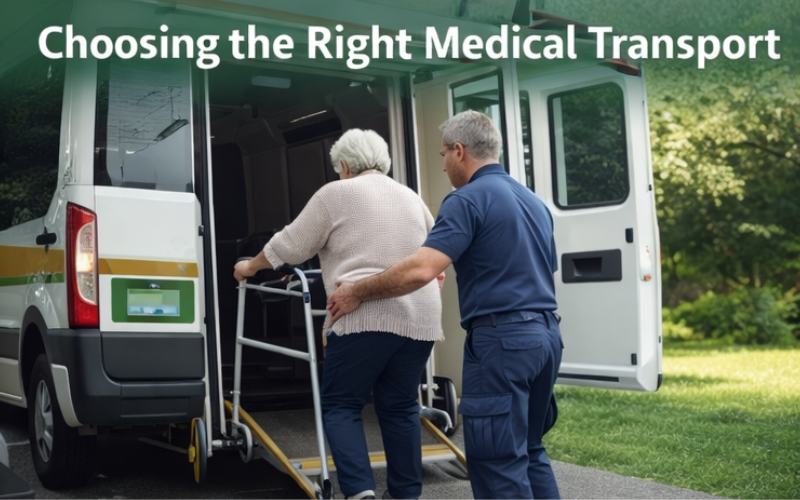
Long medical journeys are never just about distance. They involve health conditions, recovery timelines, mobility limits, emotional stress, and the need for constant safety. Choosing the wrong type of medical transport can turn an already difficult situation into a risky one, while the right choice can make the journey calm, controlled, and far safer for the patient.
This guide is created for patients, families, caregivers, and healthcare coordinators who want a clear, honest, and practical understanding of how to choose the right medical transport for long journeys. Whether the patient is elderly, recovering from surgery, living with chronic illness, or medically fragile, this article will help you make an informed decision without confusion.
📦 Quick Summary Box
This guide will help you:
- Understand different medical transport options
- Match transport type to patient condition
- Compare costs, safety, and comfort
- Avoid common medical transport mistakes
- Choose safely for long-distance journeys
Why Medical Transport Choice Matters for Long Journeys
For healthy travelers, long journeys are mostly about comfort and time. For medical patients, they are about risk management.
Poor transport decisions can lead to:
- Medical emergencies mid-journey
- Increased pain or delayed recovery
- Missed medications
- Anxiety and emotional distress
- Life-threatening complications
The right medical transport ensures:
- Continuous monitoring
- Proper positioning
- Timely medication
- Emergency response if needed
Step 1: Assess the Patient’s Medical Condition Honestly
Before choosing any transport, start with the patient’s current medical stability, not assumptions.
Ask these critical questions:
- Is the patient stable or fragile?
- Can they sit for long periods?
- Do they need oxygen or monitoring?
- Are they post-surgery or fully recovered?
- Is emergency intervention likely?
Always involve:
- The treating physician
- The discharge nurse
- A medical transport coordinator (if available)
Transport decisions should be medical decisions—not convenience decisions.
Step 2: Understand the Main Types of Medical Transport
There is no “one-size-fits-all” solution. Each option suits a different level of medical need.
🚑 Medical Transport Options Comparison Table
| Transport Type | Best For | Medical Support | Comfort Level | Cost Range |
|---|---|---|---|---|
| Commercial Flight | Stable patients | Minimal | Moderate | Low |
| Medical Escort Flight | Semi-stable patients | Basic medical care | Moderate | Medium |
| Non-Emergency Medical Transport (NEMT) | Mobility-limited patients | Trained staff | High | Medium |
| Ground Ambulance | Moderate-risk patients | Continuous monitoring | High | Medium–High |
| Air Ambulance | Critical patients | ICU-level care | Very High | High |
Option 1: Commercial Flights for Medical Travel
Commercial flights can work for stable patients who do not require medical monitoring.
Suitable for:
- Patients traveling for consultations
- Fully healed post-treatment patients
- Patients who can sit upright for long hours
Pros:
- Cost-effective
- Fast for international travel
- Widely available
Cons:
- No medical supervision
- Risk of blood clots
- Cabin pressure issues
- Limited movement
Important: Always request wheelchair assistance and medical clearance if needed.
Option 2: Commercial Flights with Medical Escort
This option includes a trained medical professional traveling with the patient.
Suitable for:
- Elderly patients
- Post-surgery patients with mild risks
- Patients needing medication or observation
Benefits:
- Basic medical supervision
- Assistance with mobility and medication
- Peace of mind for families
Limitations:
- No advanced medical equipment
- Dependent on airline rules
Real-world example:
An elderly patient traveling internationally for cancer follow-up benefited from a medical escort who managed medications and fatigue during the journey.
Option 3: Non-Emergency Medical Transport (NEMT)
NEMT vehicles are designed specifically for long road journeys.
Suitable for:
- Wheelchair or stretcher-bound patients
- Elderly patients with mobility issues
- Stable patients requiring assistance
Features include:
- Reclining stretchers
- Trained attendants
- Climate control
- Scheduled rest breaks
Pros:
- Comfortable for long distances
- Door-to-door service
- Lower stress
Cons:
- Slower than flights
- Limited emergency response
Option 4: Ground Ambulance for Long Journeys
Ground ambulances are ideal when medical monitoring is essential.
Suitable for:
- Post-surgery patients
- Patients with heart or lung conditions
- Patients needing IV medication
Advantages:
- Continuous medical supervision
- Emergency response capability
- Controlled environment
Disadvantages:
- Long travel times
- Higher cost than NEMT
Best for journeys under 1,000 km when patient stability is uncertain.
Option 5: Air Ambulance for Critical Long-Distance Travel
Air ambulances are the safest option for high-risk or unstable patients.
Suitable for:
- ICU patients
- Ventilator-dependent patients
- Recent major surgery cases
- Emergency international transfers
What air ambulances offer:
- ICU-grade equipment
- Doctors and nurses onboard
- Rapid long-distance transport
- Minimal physical stress
Downsides:
- High cost
- Insurance approval may be needed
When life is at risk, cost becomes secondary to safety.
Step 3: Match Transport to Distance and Duration
Distance plays a major role in decision-making.
General guidance:
- Short distances (under 200 km): NEMT or ground ambulance
- Medium distances (200–800 km): Ground ambulance or medical escort flight
- Long distances (800+ km): Flight, medical escort, or air ambulance
The longer the journey, the greater the need for comfort and medical oversight.
Step 4: Consider Comfort and Positioning Needs
Comfort directly affects recovery and safety.
Ask:
- Can the patient lie flat or recline?
- Is pressure relief needed?
- Is frequent repositioning required?
Comfort-enhancing features:
- Cushioned stretchers
- Adjustable head elevation
- Smooth suspension vehicles
- Temperature control
Step 5: Evaluate Costs and Insurance Coverage
Medical transport costs vary widely.
Cost considerations:
- Distance traveled
- Level of medical staff
- Equipment requirements
- One-way vs round-trip
Insurance tips:
- Check policy coverage early
- Get written approvals
- Ask about reimbursement options
Never delay urgent transport while waiting for insurance confirmation.
Step 6: Red Flags When Choosing a Medical Transport Provider
Avoid providers that:
- Refuse to share staff credentials
- Do not inspect patient condition beforehand
- Offer unrealistically low pricing
- Lack emergency protocols
Always verify:
- Licensing and certifications
- Experience with similar cases
- Equipment availability
- Clear communication
Common Mistakes to Avoid
❌ Choosing transport based on cost alone
❌ Ignoring medical advice
❌ Underestimating journey fatigue
❌ Skipping caregiver involvement
❌ Poor emergency planning
Quick Checklist: Choosing the Right Medical Transport
✔ Patient condition assessed
✔ Doctor’s recommendation obtained
✔ Transport matched to distance
✔ Comfort and equipment confirmed
✔ Costs and insurance reviewed
✔ Emergency plan prepared
Pros and Cons Summary
✅ Benefits of Proper Medical Transport:
- Reduced health risks
- Better comfort
- Emotional reassurance
- Faster recovery
❌ Risks of Poor Transport Choices:
- Medical emergencies
- Delayed healing
- Increased stress
- Higher long-term costs
Frequently Asked Questions (FAQs)
1. How do I know which medical transport is right?
Base the decision on medical stability, distance, and doctor’s advice.
2. Is air ambulance always necessary?
No. It’s reserved for critical or high-risk patients.
3. Can elderly patients use commercial flights?
Yes, if medically stable and assisted properly.
4. Are medical transport services safe?
Reputable providers follow strict safety and medical protocols.
5. Is a caregiver required during transport?
Strongly recommended for elderly and post-surgery patients.
6. How far in advance should transport be booked?
As early as possible, ideally 1–2 weeks ahead for planned travel.
7. Does insurance cover medical transport?
Some plans do, but coverage varies—confirm in advance.
Conclusion
Choosing the right medical transport for long journeys is one of the most important healthcare decisions a family can make. It’s not just about reaching a destination—it’s about protecting health, dignity, and peace of mind throughout the journey.
When transport matches the patient’s medical needs, long-distance travel becomes safer, calmer, and more manageable. Thoughtful planning today can prevent serious complications tomorrow.