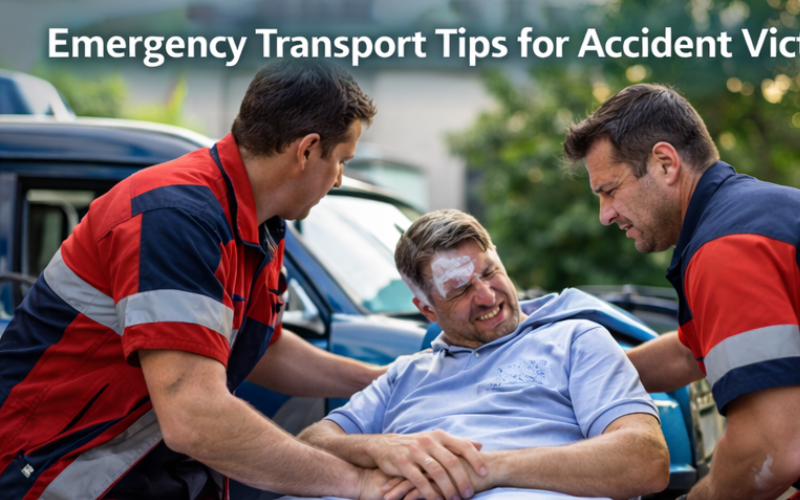
Accidents happen suddenly and without warning. One moment everything is normal, and the next, someone is injured and in urgent need of medical attention. In those moments, how an accident victim is transported can play a critical role in their recovery—and in some cases, survival.
Many people panic and rush to move the injured person immediately. While the intention is good, improper transport can worsen injuries, especially in cases involving the head, spine, or internal bleeding.
This comprehensive guide explains emergency transport tips for accident victims in a clear, practical, and human way. It’s designed for everyday people—drivers, family members, coworkers, and bystanders—who may find themselves in an emergency before professional help arrives.
🔍 Quick Summary Box
Emergency transport for accident victims should focus on:
- Calling professional medical help first
- Avoiding unnecessary movement
- Stabilizing the victim before transport
- Choosing the safest transport option
- Preventing further injury during movement
Correct decisions during transport can protect lives and reduce long-term damage.
Why Emergency Transport Decisions Matter
Transporting an accident victim isn’t just about getting them to a hospital quickly. It’s about getting them there safely.
Improper handling can:
- Worsen spinal injuries
- Increase internal bleeding
- Cause permanent disability
- Turn a manageable injury into a life-threatening one
Knowing when to move someone—and when not to—can make all the difference.
Quick Emergency Transport Checklist
Before moving an accident victim, quickly review this checklist:
- ✔️ Call emergency services immediately
- ✔️ Check if the scene is safe
- ✔️ Assess the victim’s condition
- ✔️ Avoid moving them unless necessary
- ✔️ Stabilize head, neck, and spine
- ✔️ Control bleeding
- ✔️ Keep the victim calm and warm
This checklist applies to most accident situations.
Step 1: Call Emergency Services First
No matter how minor the accident appears, always call emergency services first.
Why This Step Is Non-Negotiable
- Professionals can guide you on what to do
- Ambulances carry life-saving equipment
- Paramedics are trained to transport safely
Even if you plan to transport the victim yourself, get professional advice first.
Step 2: Assess the Scene for Safety
Before approaching or moving the victim, ensure the area is safe.
Common Hazards After Accidents
- Moving traffic
- Fire or smoke
- Fuel leaks
- Electrical wires
- Collapsing structures
If the area is dangerous, carefully move the victim only enough to reach safety.
Step 3: When You Should NOT Move an Accident Victim
This is one of the most important emergency transport tips.
Do NOT Move the Victim If:
- They are unconscious
- There is suspected head, neck, or spinal injury
- They complain of severe neck or back pain
- There is numbness or inability to move limbs
- The accident involved high impact (car crash, fall from height)
In these cases, waiting for trained professionals is the safest option.
Step 4: Situations Where Transport May Be Necessary
There are situations where immediate transport is unavoidable.
You May Need to Move the Victim If:
- There is fire, smoke, or explosion risk
- The victim is blocking traffic and in danger
- Emergency services are unavailable or delayed
- You are in a remote area
Even then, movement should be slow, careful, and minimal.
Step 5: Stabilize Before Transporting
Before moving an accident victim, stabilization is critical.
Key Stabilization Steps
- Support the head and neck in a neutral position
- Ask the victim not to move
- Control visible bleeding with pressure
- Keep the body aligned
- Loosen tight clothing
Stabilization reduces the risk of further injury during transport.
Step 6: Emergency Transport Tips for Road Accidents
Road accidents are among the most common emergencies.
What to Do at the Accident Scene
- Turn off vehicle engines if safe
- Use hazard lights or warning triangles
- Keep bystanders away
- Do not remove helmets from motorcyclists
Removing helmets incorrectly can cause severe spinal damage.
Step 7: Choosing the Right Transport Option
Not all transport methods are equal.
Transport Options Comparison Table
| Transport Option | When It’s Appropriate | Risks |
|---|---|---|
| Ambulance | Serious injuries, unknown condition | None (safest option) |
| Private car | Minor injuries, no spinal risk | Limited medical support |
| Public transport | Rarely recommended | High risk |
| Motorcycle | Never recommended | Extremely unsafe |
Ambulance transport is always the safest choice whenever available.
Step 8: How to Safely Transport an Accident Victim in a Car
If ambulance transport is not available, extreme care is required.
Safe Transport Tips
- Lay the victim flat if possible
- Support head and neck with rolled towels
- Avoid sudden stops or turns
- Drive slowly and smoothly
- Have someone monitor the victim continuously
Stop immediately if the victim’s condition worsens.
Step 9: Special Transport Considerations
Transporting Unconscious Victims
- Keep airway clear
- Place in recovery position if no spinal injury is suspected
- Monitor breathing constantly
Transporting Children
- Support head and neck carefully
- Avoid unnecessary movement
- Keep them warm and reassured
Transporting Elderly Victims
- Move gently
- Watch for shock
- Avoid forcing uncomfortable positions
Step 10: Preventing Shock During Transport
Shock can be life-threatening if not managed properly.
Signs of Shock
- Pale or clammy skin
- Rapid pulse
- Shallow breathing
- Confusion or anxiety
How to Reduce Shock Risk
- Lay the victim down
- Elevate legs slightly if safe
- Keep them warm
- Reassure them calmly
Common Mistakes to Avoid During Emergency Transport
Many injuries worsen due to well-meaning but incorrect actions.
Avoid These Errors
- ❌ Dragging the victim unnecessarily
- ❌ Forcing them to sit or stand
- ❌ Giving food or drinks
- ❌ Removing protective gear
- ❌ Ignoring signs of spinal injury
Correct restraint often saves more lives than rushed action.
Pros and Cons of Self-Transporting Accident Victims
✅ Pros
- Faster in remote areas
- Useful when ambulance is unavailable
- Immediate action possible
❌ Cons
- High risk of worsening injuries
- No medical monitoring
- Limited ability to manage complications
Self-transport should only be a last resort.
Real-Life Example: Smart Transport Saves a Life
Imagine a roadside accident in a rural area.
A driver is conscious but complains of neck pain. Instead of pulling them out, bystanders stabilize the head, control bleeding, and wait for emergency services.
Paramedics later confirm a spinal injury. The careful decision not to move the victim prevents permanent paralysis.
How to Prepare for Emergency Transport Situations
Preparation leads to better decisions.
Practical Preparation Tips
- Learn basic first aid and trauma care
- Keep emergency numbers saved
- Carry a first aid kit in your vehicle
- Understand basic injury signs
Prepared people respond with confidence, not panic.
Frequently Asked Questions (FAQs)
1. Should accident victims always be moved immediately?
No. Unnecessary movement can worsen injuries, especially spinal injuries.
2. Is it safe to transport someone in a private car?
Only if injuries are minor and professional help is unavailable.
3. Can sitting an injured person upright cause harm?
Yes. It can worsen internal injuries and spinal damage.
4. What if the victim insists on moving?
Explain the risks calmly and encourage them to stay still until help arrives.
5. Is removing a motorcycle helmet dangerous?
Yes. It should only be done by trained professionals unless breathing is blocked.
6. What is the safest way to move someone in danger?
Move them only as much as needed to reach safety while keeping the body aligned.
7. How can I tell if a spinal injury is possible?
Neck pain, numbness, paralysis, or high-impact accidents are warning signs.
Final Thoughts: Safe Transport Is as Important as Speed
In emergencies, speed matters—but safety matters more.
Understanding emergency transport tips for accident victims helps you make smart, life-protecting decisions under pressure. Sometimes the best action is careful waiting. Other times, it’s controlled movement with proper support.
The goal is always the same: get the victim medical help without causing further harm.
That knowledge alone can turn a bystander into a true lifesaver.