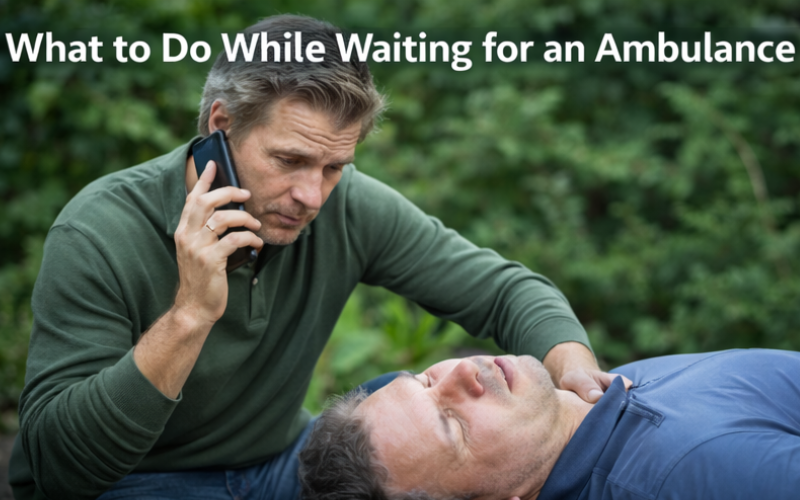
Emergencies never announce themselves. One moment everything feels normal, and the next, someone is injured, unconscious, or struggling to breathe. You call for an ambulance—and then comes the hardest part: waiting.
Those minutes before professional help arrives can feel terrifying and endless. But they are also incredibly important. What you do during this time can reduce complications, prevent the situation from getting worse, and in some cases, save a life.
This detailed guide explains exactly what to do while waiting for an ambulance, step by step, in clear and simple language. Whether you’re at home, at work, on the road, or in a public place, this article will help you stay calm, think clearly, and act wisely when it matters most.
🔍 Quick Summary Box
While waiting for an ambulance, your main priorities are:
- Stay calm and ensure safety
- Follow the dispatcher’s instructions
- Provide basic first aid if safe
- Monitor the patient closely
- Avoid actions that could worsen the situation
Small, smart actions during this time can make a big difference.
Why the Waiting Time Matters More Than You Think
Ambulance response times vary depending on location, traffic, and urgency. In cities, help may arrive in 5–10 minutes. In rural areas, it could take much longer.
During this gap:
- Bleeding can worsen
- Breathing problems can escalate
- Shock can set in
- Panic can cloud judgment
Knowing what to do while waiting for an ambulance helps bridge the gap between the emergency and professional care.
A Quick Checklist: What to Do Immediately
Use this quick checklist as soon as you call emergency services:
- ✔️ Ensure the area is safe
- ✔️ Stay on the phone with the dispatcher
- ✔️ Check the person’s responsiveness
- ✔️ Check breathing and bleeding
- ✔️ Provide first aid if trained
- ✔️ Keep the person calm and warm
- ✔️ Do not give food or drink
- ✔️ Watch for changes
Now let’s break this down in detail.
Step 1: Stay Calm and Assess the Situation
Why Staying Calm Is Critical
Panic spreads fast. If you panic, others will too—and that makes mistakes more likely.
Take a deep breath. Speak slowly. Focus on facts, not fear.
Check for Immediate Danger
Before helping, look around:
- Is there traffic nearby?
- Fire, smoke, or gas?
- Electrical wires?
- Aggressive individuals?
Never put yourself in danger. You cannot help if you become another victim.
Step 2: Call Emergency Services Correctly
If you haven’t already called, do it immediately.
What to Say When Calling an Ambulance
Be clear and concise:
- Exact location (landmarks help)
- What happened
- Number of injured people
- Age and condition of the patient
- Whether the person is conscious and breathing
Stay on the line. Dispatchers are trained to guide you step by step.
Step 3: Follow the Dispatcher’s Instructions
This is one of the most important things to do while waiting for an ambulance.
Dispatchers may guide you to:
- Perform CPR
- Stop bleeding
- Position the person safely
- Monitor breathing
Even if you feel unsure, follow their instructions carefully. They are trained for this.
Step 4: Check Responsiveness and Breathing
How to Check Responsiveness
Gently tap the person and speak loudly:
“Are you okay?”
If there’s no response, treat it as serious.
How to Check Breathing
- Look for chest movement
- Listen for breathing sounds
- Feel for breath on your cheek
If the person is not breathing or gasping, inform the dispatcher immediately.
Step 5: Provide Basic First Aid (Only If Safe)
You don’t need medical training to help—but you must act carefully.
If There Is Severe Bleeding
What to do:
- Apply firm pressure using clean cloth or hands
- Elevate the injured area if possible
- Do not remove embedded objects
Bleeding control is one of the most life-saving actions you can take.
If the Person Is Unconscious but Breathing
Place them in the recovery position:
- On their side
- Head tilted slightly back
- Mouth facing downward
This prevents choking.
If the Person Has Chest Pain
This could be a heart attack.
What to do:
- Help them sit upright
- Loosen tight clothing
- Keep them calm
- Do not let them walk around
Do not give medication unless instructed by a professional.
If the Person Is Choking
If they cannot cough or speak:
- Perform abdominal thrusts (if trained)
- Follow dispatcher guidance carefully
Step 6: Keep the Person Calm and Comfortable
Fear and anxiety can worsen symptoms.
How to Calm Someone in an Emergency
- Speak slowly and reassuringly
- Make eye contact
- Tell them help is on the way
- Encourage slow breathing
Cover them with a jacket or blanket to maintain body temperature.
Step 7: What NOT to Do While Waiting for an Ambulance
Knowing what not to do is just as important.
Avoid These Common Mistakes
- ❌ Do not give food or drinks
- ❌ Do not move someone with suspected spinal injury
- ❌ Do not slap or shake an unconscious person
- ❌ Do not overcrowd the patient
- ❌ Do not delay the ambulance by moving unnecessarily
Good intentions can still cause harm if actions are careless.
Step 8: Monitor the Situation Constantly
Conditions can change quickly.
Watch for:
- Changes in breathing
- Skin color (pale or bluish)
- Loss of consciousness
- Increased bleeding
Update the dispatcher if anything changes.
Special Situations and What to Do
Road Accidents
- Turn off engines if safe
- Use hazard lights
- Keep victims still
- Do not remove helmets
Children and Infants
- Keep them warm
- Do not over-handle
- Watch breathing closely
Elderly Patients
- Be gentle
- Watch for shock
- Speak clearly and slowly
Comparison Table: Helpful Actions vs Harmful Actions
| Helpful Actions | Harmful Actions |
|---|---|
| Applying pressure to bleeding | Removing embedded objects |
| Staying calm | Panicking |
| Following dispatcher advice | Ignoring instructions |
| Keeping patient warm | Giving food or drink |
| Monitoring breathing | Leaving patient alone |
Pros and Cons of Providing First Aid While Waiting
✅ Pros
- Can prevent condition from worsening
- May save a life
- Reduces complications
- Provides comfort
❌ Cons
- Risk of incorrect technique if untrained
- Fear of doing something wrong
Bottom line: Doing something safe and simple is usually better than doing nothing.
Practical Real-Life Example
Imagine a coworker collapses at the office.
You call emergency services. While waiting:
- You ensure the area is safe
- Follow dispatcher instructions
- Check breathing
- Keep them comfortable
- Reassure them
When paramedics arrive, your actions have already stabilized the situation.
That’s the power of knowing what to do while waiting for an ambulance.
How to Prepare for Emergencies in Advance
Preparation saves lives.
Smart Preparation Tips
- Learn basic first aid
- Keep emergency numbers saved
- Have a basic first aid kit
- Know your location details
Prepared people respond better under pressure.
Frequently Asked Questions (FAQs)
1. What is the most important thing to do while waiting for an ambulance?
Staying calm and following the dispatcher’s instructions is the most important step.
2. Should I try to drive the patient to the hospital myself?
Only if instructed by emergency services. Moving a patient incorrectly can cause serious harm.
3. Can I give water to someone who is injured?
No. Food or drink can cause choking or complications during treatment.
4. What if I don’t know first aid?
You can still help by calling emergency services, staying calm, and following instructions.
5. How can I help someone who is panicking?
Speak calmly, reassure them, and encourage slow breathing.
6. Is it okay to leave the person alone briefly?
Only if absolutely necessary and for a very short time. Continuous monitoring is best.
7. What if the ambulance is delayed?
Stay on the phone with emergency services and continue monitoring the patient.
Final Thoughts: Your Actions Matter More Than You Realize
Emergencies are overwhelming—but they don’t have to leave you helpless.
Knowing what to do while waiting for an ambulance gives you confidence, clarity, and control in a chaotic moment. You don’t need to be a medical professional to make a difference. Calm actions, basic awareness, and common sense can protect lives.
One day, this knowledge could help a stranger, a coworker, or someone you love.
And that makes learning it absolutely worth it.