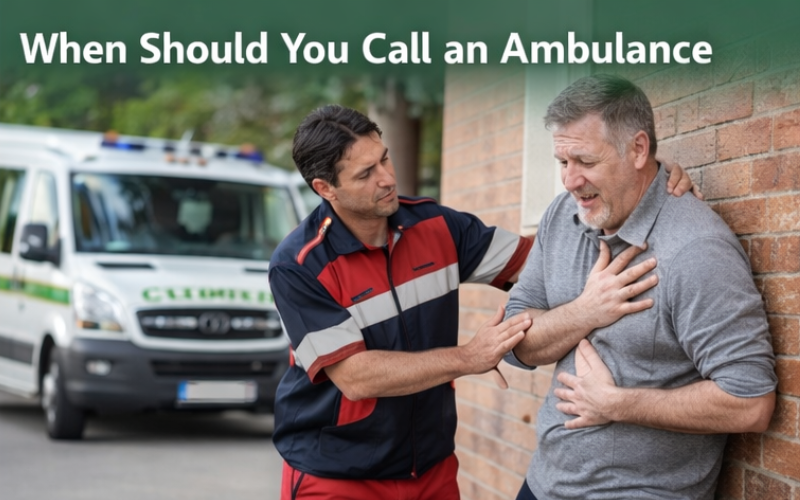
In emergencies, hesitation can be dangerous. But calling an ambulance for every health issue isn’t always necessary either.
Knowing when to call an ambulance can save lives, reduce complications, and ensure medical resources are used correctly.
This guide explains clear situations where calling an ambulance is the right decision.
🚑 Quick Summary Box
Call an ambulance when immediate medical attention, rapid transport, or on-the-way care is required.
Situations Where You Should Call an Ambulance Immediately
1. Chest Pain or Heart Attack Symptoms
Warning signs include:
- Chest pressure or pain
- Pain spreading to arm or jaw
- Shortness of breath
Time is critical in heart emergencies.
2. Stroke Symptoms
Use the FAST rule:
- Face drooping
- Arm weakness
- Speech difficulty
- Time to call
Every minute matters.
3. Severe Injuries or Accidents
Including:
- Road accidents
- Falls with head injury
- Heavy bleeding
Ambulances provide immediate stabilization.
4. Breathing Difficulties
Sudden breathing problems require urgent care, especially in children and elderly patients.
5. Loss of Consciousness
Even brief unconsciousness needs medical evaluation.
6. Severe Burns or Electric Shock
These injuries can worsen rapidly without treatment.
When You May Not Need an Ambulance
- Minor cuts or bruises
- Mild fever
- Non-urgent medical visits
In such cases, clinics or non-emergency transport may be better.
Emergency vs Non-Emergency Table
| Situation | Ambulance Needed? |
|---|---|
| Chest pain | Yes |
| Minor cold | No |
| Stroke signs | Yes |
| Routine checkup | No |
Common Hesitations That Delay Help
- Fear of cost
- Thinking symptoms will pass
- Not wanting to “bother” emergency services
These delays can be life-threatening.
Quick Decision Checklist
- ⬜ Life-threatening symptoms
- ⬜ Patient cannot move safely
- ⬜ Rapid deterioration risk
- ⬜ Needs medical care during transit
If yes, call immediately.
FAQs
Q1: Should I drive instead of calling an ambulance?
Only if the situation is non-critical.
Q2: Can ambulances treat patients on the way?
Yes, that’s a key advantage.
Conclusion
When in doubt, err on the side of safety. Calling an ambulance at the right time can mean the difference between recovery and serious complications.